A ceiling tells you a direction rather than a species, and the direction is usually useful. Small pale caterpillars inching along it are meal moth larvae leaving a cupboard to pupate. Sluggish flies on it in autumn came from the loft. Spiders are hunting whatever the light attracted. And carpet beetle larvae above a room usually mean a bird nest in the eaves.
- Small pale caterpillars, often heading for a corner: meal moth larvae, and the source is a food packet.
- Slow flies gathering at a window or a light in autumn: cluster flies from the roof space.
- Bristly larvae repeatedly on an upstairs ceiling: check the eaves for a bird or wasp nest.
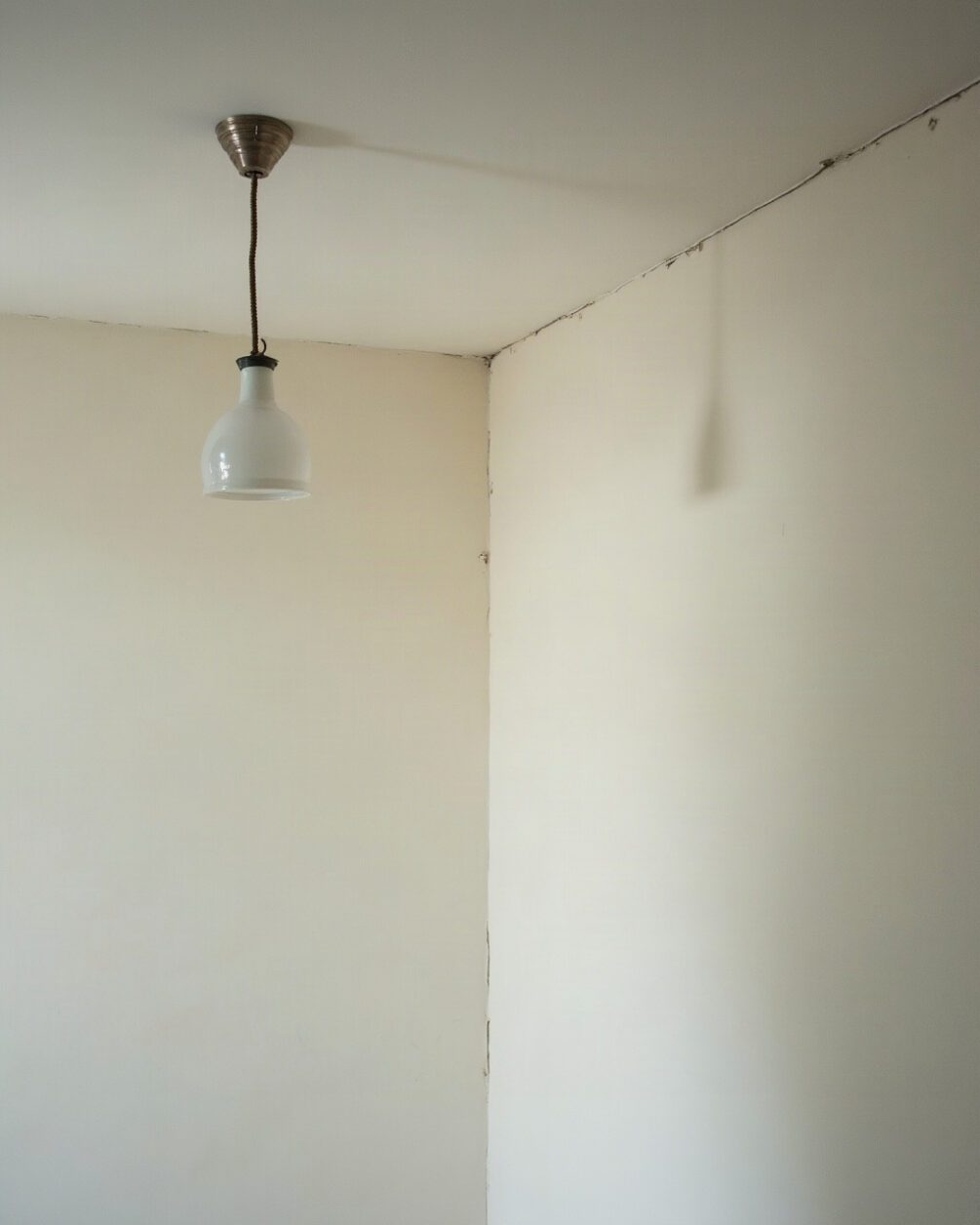
Ceilings are where people notice insects they would have walked past on a floor, so ceiling sightings are over-represented relative to how much is actually up there. The useful part is that most things end up on a ceiling for a reason that points somewhere specific.
Meal moth larvae, the most common answer
If you are seeing small pale caterpillars, roughly a centimetre, inching along a ceiling or a wall near the top, this is almost always an Indian meal moth larva, and it is not lost.
When they finish feeding, the larvae leave the food and travel a surprising distance to pupate, often upward, and they favour the junction where a wall meets a ceiling and the corners of cupboards. That is why people find them in rooms containing no food at all, and why the instinct to look for a source nearby fails.
Kentucky’s guidance is that stored product infestations usually trace back to a single contaminated item. The search is in the kitchen even when the sighting is in a hallway: dry goods, flour, rice, cereal, nuts, dried fruit, birdseed, and dry pet food, checked packet by packet over a white surface. Look at the top corners inside cupboards too, where the silk and cases collect.
Our meal moth guide covers the life cycle that explains the travel, the removal guide covers the work, and the cupboard identification guide covers what else lives in the same packets.
Cluster flies and the loft
Larger, slower and more sluggish than house flies, with golden hairs on the thorax, gathering at upstairs windows and on ceilings in autumn and again on warm winter days.
They overwinter in roof spaces and wall cavities in large numbers, and the ones you see indoors have come down through a gap around a light fitting, a loft hatch or a service penetration rather than in through a door. Their larvae parasitise earthworms outdoors, so they have no connection to hygiene inside the house, which is worth knowing when they appear in a spotless room.
Our cluster fly guide covers them, How to Get Rid of Cluster Flies covers the January wake-ups, and the guide to autumn wall gatherings covers how they got into the roof in the first place.
Spiders, and what they are telling you
A spider on a ceiling is hunting or waiting, and both point at the same thing: flying insects gathering near a light.
Kentucky’s overview of common spiders found around homes and buildings covers the species people meet, and our house spider guide is the practical version. The more useful page here is what attracts spiders, because the honest answer is prey and lighting rather than the spider itself.
If webs keep reappearing in the same ceiling corner, that corner is where insects collect, usually because of a light or a draught. Changing the light does more than removing the web.
Carpet beetle larvae, and the nest above
This is the one worth acting on, because it points at something structural.
Carpet beetle larvae turning up repeatedly on an upstairs ceiling, in a bedroom or on a landing, frequently trace to a bird nest in the eaves or soffit, or an old wasp nest in the roof space. Kentucky notes the larvae feed on wool, fur, feathers and other animal products, and an abandoned nest is a large supply of exactly that: feathers, down, dead nestlings and insect remains.
They breed in it and then disperse downward into the rooms below, which is why the infestation seems to have no source inside the house. Our identification guide shows what they look like, and the removal guide covers the indoor work, but removing the nest is what ends it.
Check the eaves from outside with binoculars in daylight before assuming the problem is in the carpet.
Ants and the ceiling trail
An ant trail on a ceiling usually means the nest is above or within the structure rather than outdoors, and in a property with a flat roof or a first floor it can mean water damage in the fabric, because carpenter ants prefer timber that is already damp.
Our ant identification guide covers the species, and the distinction matters: a trail of small ants following a route to a kitchen is different from carpenter ants excavating a wet joist, and the second one is a building question.
What almost never explains a ceiling
Bed bugs. They stay within a short distance of a sleeping host and do not wander across ceilings.
Fleas. They jump from the floor and need an animal.
Termites, except as swarmers around a light in spring, which is a different and more serious observation. Our guide to termite swarmers covers what that means, and the check is four equal-length wings.
Common questions
They only appear near the light fitting.
That points at the loft or the ceiling void, because a light fitting is a hole in the ceiling. It also points at flying insects drawn to the lamp, which brings the spiders.
I have found dozens of small caterpillars but no moths.
Normal, and it means the larvae have finished feeding and are dispersing. The adults come later, are small and buff, and flutter weakly rather than circling a lamp. Finding the source packet still matters.
Is there something living in the ceiling void?
Possibly, and the honest way to check is to look: loft hatch, torch, and a proper search for nests, droppings and dead insects. Repeated sightings in one room, always on the ceiling, are the pattern that justifies the trip.
Final verdict
Read the ceiling as an arrow. Pale caterpillars inching upward mean a food packet in the kitchen, however far away the sighting is. Sluggish autumn flies mean the roof space. Webs in one corner mean a light gathering prey. And bristly larvae appearing again and again on an upstairs ceiling mean it is time to look at the eaves from outside, because a bird nest full of feathers feeds a carpet beetle population that no amount of vacuuming indoors will reach.